
Wellpoint Remediation Projects and Wellpoint Dewatering To Enable LGAB Works
WELLPOINT REHABILITATION PROJECTS
Overview
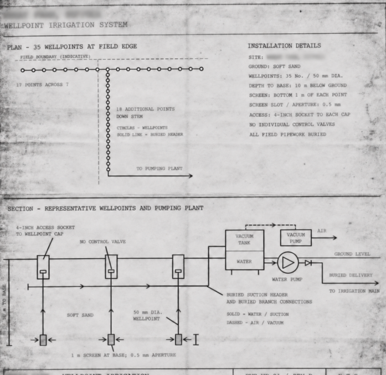
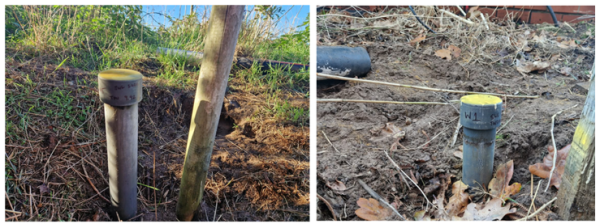
PDL was contacted to investigate and rehabilitate permanent wellpoint irrigation systems across Suffolk. These permanent wellpoint systems were installed in the 1990s and were facing reduced output and deteriorating water quality. Factors that can affect permanent abstraction systems include a build-up of iron deposits, entrained sand, and biofouling. Understanding which factors are contributing to a deteriorating system is essential in determining the most appropriate rehabilitation measures for an existing installation. The investigations informed a targeted strategy to improve yield, water quality and the long-term reliability of the irrigation supply.
Our Approach
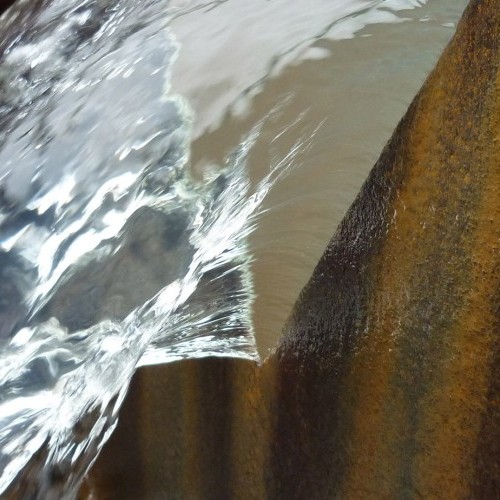
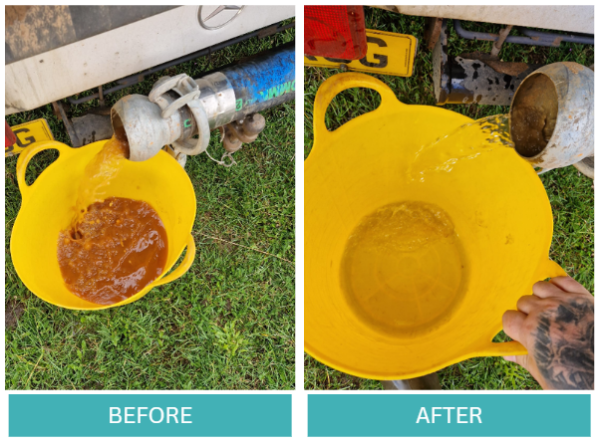
PDL adopted a systematic approach to assess wellpoint performance. Water recovered from the wellpoints and the system tank showed evidence of iron deposits within the abstraction systems. These deposits can affect the performance in several ways, such as restricting groundwater entry and flow throughout the associated pipework.
For the initial stage of rehabilitation, PDL developed a coordinated programme of cleaning, redevelopment and performance testing. Baseline measurements included flow rates, operating vacuum, and water levels, with individual wellpoint performance assessed where practicable. The works involved cleaning, redeveloping and pumping each wellpoint, together with cleaning the existing infrastructure. The systems were then retested to assess the improvements achieved.
Outcome
PDL was able to successfully investigate the problems resulting in a reduced performance of these permanent water abstraction systems. Following the cleaning and redevelopment works, both water quality and yield improved, restoring the system’s effectiveness for irrigation supply.
To ensure the sustainability and long-term performance of the system, PDL established a planned maintenance programme comprising regular inspections and performance monitoring. Tracking performance over time will help identify early signs of deterioration and inform future maintenance, supporting the system’s long-term reliability.
BOURNEMOUTH DEWATERING
Overview
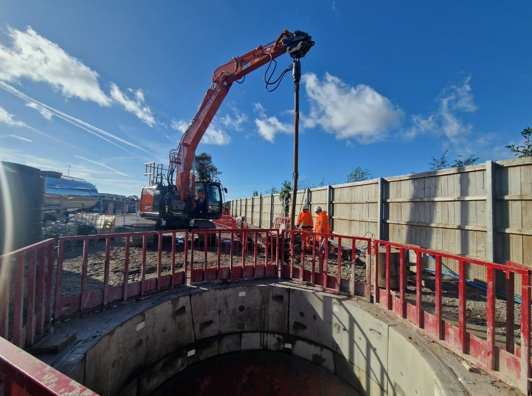
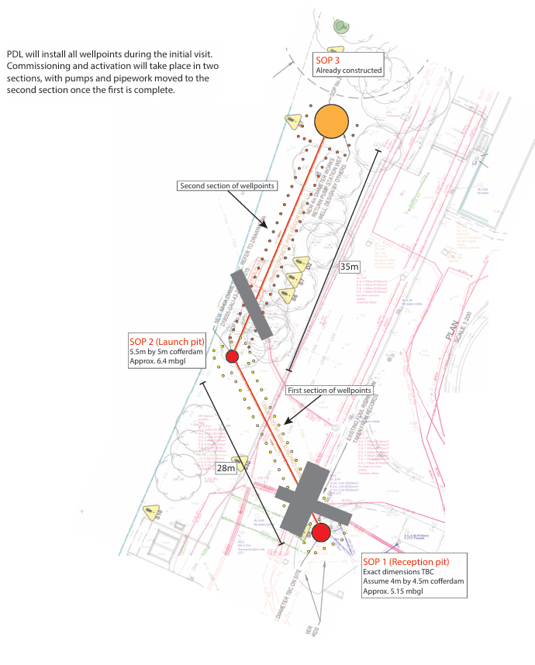
PDL designed a temporary dewatering system to facilitate the excavation of launch and reception shafts in Bournemouth and to support laser guided auger bore (LGAB) works.
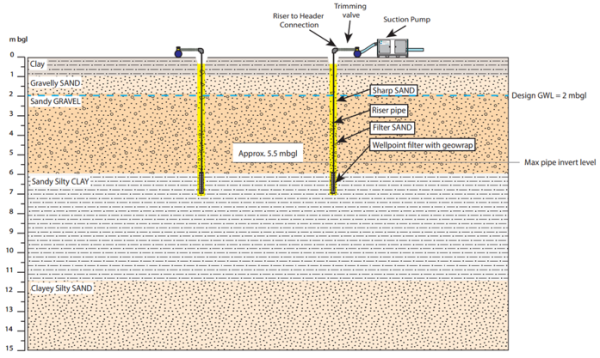
The excavations extended to a maximum depth of 5.6 mbgl. Ground conditions comprised SAND and GRAVEL overlying sandy silty CLAY encountered at approximately 6 mbgl. A design groundwater level of 2 mbgl was assumed.
Our Approach
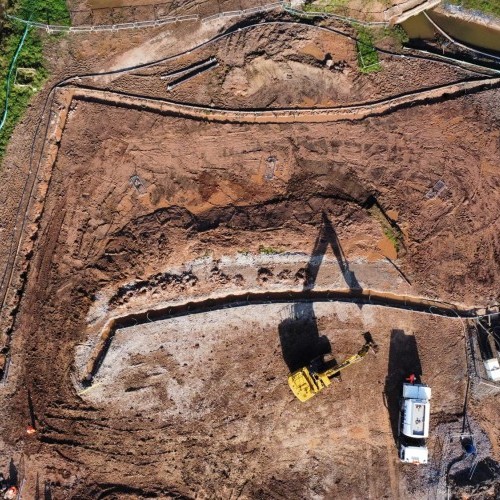
PDL designed a dewatering system to control groundwater around both shafts and along the auger bore alignments. Wellpoints were installed at spacings ranging from 1 m to 2 m and to depths of up to 7 mbgl. The wellpoints toed into the underlying CLAY and lowered water to as close to its surface as practicable.
The shafts were supported by caissons which contributed to limiting lateral groundwater inflow and overbleed. Wellpoints were installed around the perimeter of each shaft at 1 m spacings with the aim of lowering the surrounding groundwater level and reducing the external hydraulic head before openings were formed for the auger boring machine. A 2-inch hydraulic submersible pump was also included within the design to manage groundwater overbleed where the shafts extended close to the underlying CLAY.
Along the auger bore alignments, wellpoints were installed on both sides at spacings of approximately 1.5 m to 2.0 m. This arrangement was also intended to lower the groundwater level as close to the top of the clay as practicable.
Outcome
PDL successfully implemented the dewatering design on site, providing effective groundwater control for the launch and reception shaft excavations and supporting the LGAB works. The wellpoint systems enabled the works to progress smoothly, demonstrating the effectiveness of a coordinated dewatering approach tailored to the shaft excavations, bore alignments and local ground conditions.