
Wellpoint Dewatering Facilitating Excavations across England
NORTHAMPTONSHIRE DEWATERING
Overview
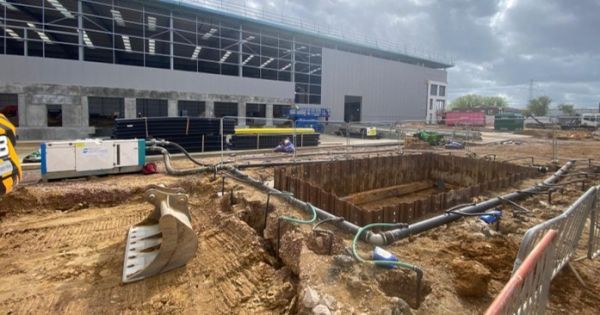
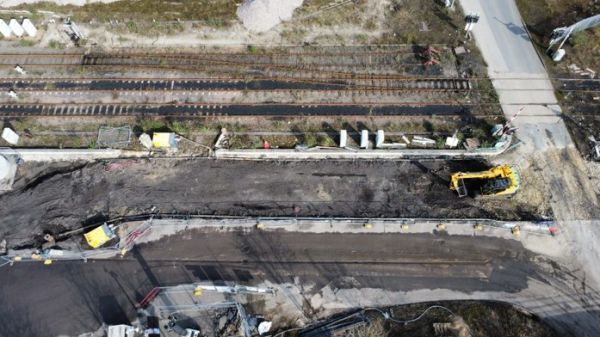
A client urgently reached out to PDL for a dewatering proposal to facilitate the excavation of a pump station and interceptor tank, and to implement a silt management system for all dewatering activities on site.
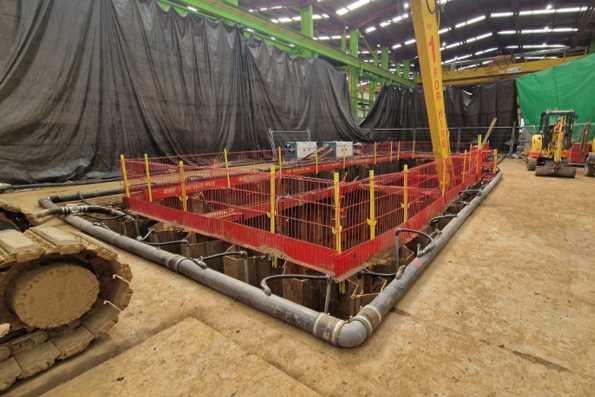
The pump station and interceptor tank had perimeters of 20 m and 27 m respectively, with depths of 4.2 mbgl and 4.6 mbgl. The interceptor tank was supported by sheet piles which did not provide a groundwater cut-off into the excavation.
Available ground investigation data described the strata sequence as soft CLAY over SAND and GRAVEL, underlain by CLAY encountered at 5.1 mbgl. Groundwater was observed at 0.98 mbgl.
Our Approach
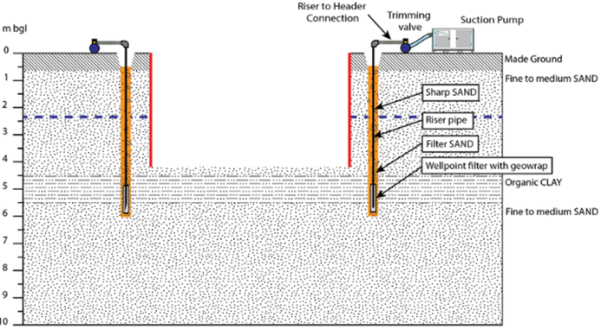
For both excavations, PDL proposed the use of perimeter wellpoint dewatering. The dewatering designs were very similar for both excavations. Wellpoints were spaced at 1.5 m centres and extended up to a depth of 6 m. Wellpoints were placed external to the sheet piles for the interceptor tank excavation.
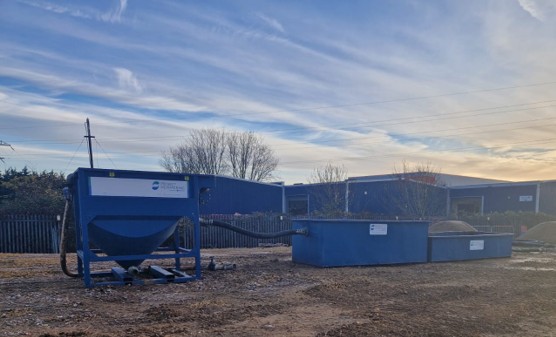
As well as dewatering the two excavations, PDL also supplied the client with a silt management system to manage the suspended solids for the whole site’s discharge activities. This was done with a lamella plate clarifier and cascading tank system.
Outcome
Both excavations were able to be dewatered seamlessly and efficiently, facilitating the construction of the pump station and interceptor tank. Thanks to PDL’s silt management system, the water from the site’s discharge activities was able to be treated and silt was able to be removed from the discharge. Overall, the project provided another great success for PDL.
YORKSHIRE 1 DEWATERING
Overview
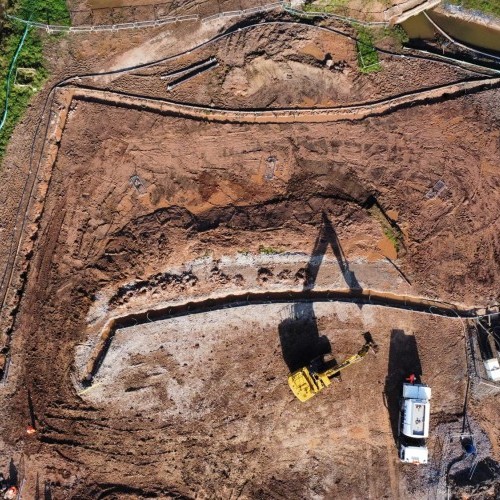
PDL was contacted to design a system to dewater proposed drainage runs in West Yorkshire. The drainage totalled a length of approximately 1.5 km and extended to a maximum depth of 4.2 mbgl.
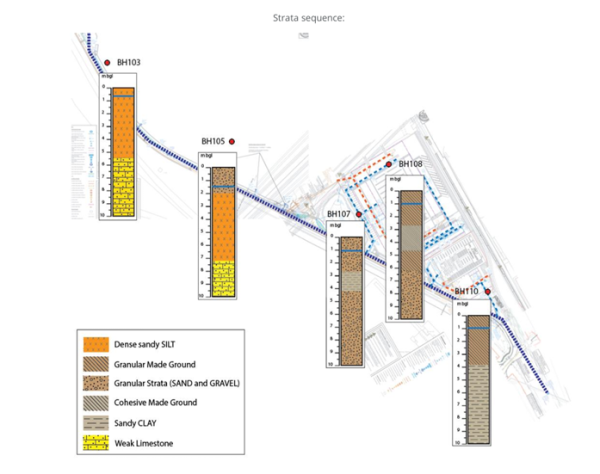
The subsurface strata across the site was extremely variable and thus posed a challenge for the dewatering design. The superficial geology consisted of alluvium comprising cohesive beds with interbedded granular strata overlying glaciofluvial sands and gravels. Dolostone bedrock directly underlies the superficial deposits.
Elevated groundwater levels were encountered in the majority of trial pits and monitoring wells, with groundwater commonly recorded at approximately 1 mbgl.
Our Approach
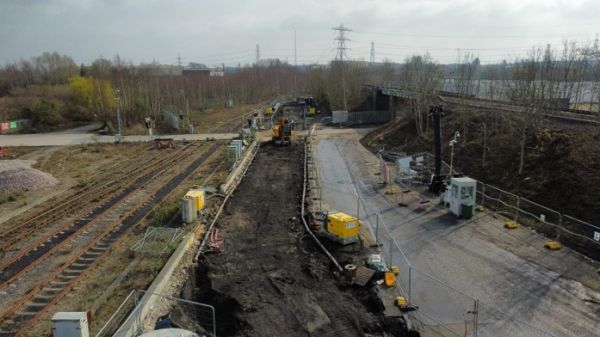
PDL designed a double-sided wellpoint dewatering system to control groundwater during excavation works. Initially, a 70 m double-sided wellpoint arrangement was installed and operated using up to four wellpoint pumps, as required. Wellpoints were positioned on both sides of the proposed trenches and along their full length at 2.0 m spacings and extending approximately 2.0 m below the formation level of the drainage runs, or to a maximum installation depth of 6.0 mbgl.
As the pipeline excavation progressed, additional wellpoints were installed sequentially, and the pumping equipment was leapfrogged along the alignment. This ensured that the excavation was able to progress without interruption.
Project Dewatering reviewed all available technical information and ensured that sufficient pumping capacity was allowed for within the design to mitigate the risk of under-capacity and maintain effective groundwater control.
Outcome
The dewatering system operated smoothly and as expected. The client was able to safely excavate the drainage runs without interruption and it was another dewatering success for PDL. The dewatering system has since been decommissioned and removed from site upon completion of the works.
YORKSHIRE 2 DEWATERING
Overview
PDL was requested to dewater a sheet-piled excavation in another region in West Yorkshire. This project posed a challenge to the PDL team due to its tight confinement within a warehouse unit.
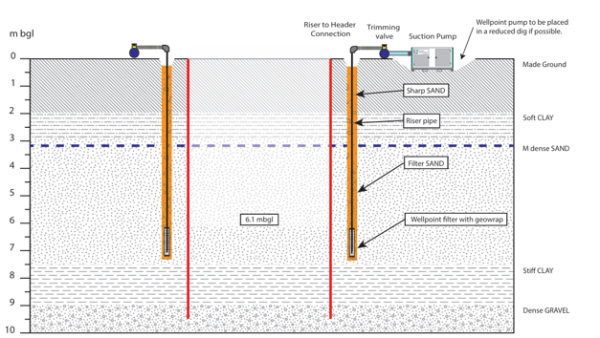
The excavation extended up to 6.1 mbgl. The subsurface strata showed a succession of soft CLAY, dense SAND, and stiff CLAY underlying the 2 m thick Made Ground. The sheet piles toed into the stiff CLAY, providing a significant groundwater cut-off to the excavation. The groundwater level was assumed to be at approximately 3.1 mbgl.
Our Approach
To reduce the groundwater level, the majority of wellpoints were installed to the base of the dense SAND (~7 mbgl) external to the sheet piles. A small number of wellpoints were installed internal to the sheet piles to manage groundwater seepage at the unclutched corners.
Outcome
PDL responded very quickly to the initial enquiry and close correspondence with the client helped overcome the site constraints and access challenges. The dewatering system was installed efficiently and completed on programme.